---CS.jpg)
Executive Summary
EARLY-STAGE OPPORTUNITY - MODERATE TO HIGH RISK WITH STRONG COMMUNITY SUPPORT
The Iqaluit Hydroelectric Project represents pioneering Arctic renewable infrastructure aimed at displacing diesel generation in Nunavut's capital city (population 8,000+). The project would construct small-scale hydroelectric facility on rivers near Iqaluit, providing clean baseload power to Canada's northernmost territorial capital whilst demonstrating climate adaptation and energy sovereignty for Inuit communities.
The opportunity aligns with Inuit priorities for energy independence, emissions reduction, and economic development within Nunavut's comprehensive land claims framework. Qulliq Energy Corporation (territorial Crown corporation) leads feasibility assessment in consultation with Government of Nunavut and Inuit organisations. Federal government signals infrastructure funding availability through Arctic and Northern Policy Framework emphasising Indigenous-led northern development.
Moderate-to-high risk profile reflects extreme Arctic construction challenges (permafrost engineering, short construction seasons, remote logistics), limited local supply chain, and small project scale affecting economies. However, strong community support, renewable energy alignment with Inuit values, federal funding commitment to northern infrastructure, and successful precedent from nearby Nunavik hydroelectric projects provide confidence in technical and political feasibility.
Investment thesis centres on federal government's willingness to subsidise northern infrastructure serving climate adaptation and Indigenous community development objectives rather than purely commercial returns. Patient capital with development finance orientation suits this opportunity better than commercial infrastructure funds seeking market-rate returns.
Verdict: Conditional investment consideration for climate-focused development finance institutions and patient capital providers. Not suitable for commercial infrastructure funds requiring market-rate returns without subsidy.
Project Overview
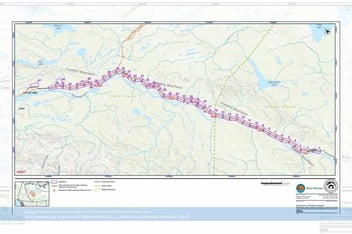
Location: Rivers near Iqaluit, Baffin Island, Nunavut (approximately 15-30 km from city)
Project Type: Small-scale run-of-river hydroelectric generation
Estimated Investment: CAD $500 million - $1 billion
Proponent: Qulliq Energy Corporation (Nunavut territorial Crown corporation)
Indigenous Territory: Nunavut (Inuit land claims territory under 1993 Nunavut Land Claims Agreement)
Status: Feasibility study and planning stage; no regulatory applications filed
Timeline: Construction 2028-2030 (estimated); completion early 2030s
Capacity: 5-15 MW (estimated; sufficient for Iqaluit's current demand)
Project Description
Technical Configuration:
Project would likely utilise run-of-river design on waterways flowing into Frobisher Bay near Iqaluit, minimising reservoir requirements unsuitable for permafrost terrain. Small generating capacity (5-15 MW) reflects Iqaluit's modest electricity demand whilst providing clean baseload power eliminating diesel dependency. Transmission infrastructure would connect generating site to Iqaluit's distribution system via approximately 15-30 km overhead or buried lines.
Current Energy Context:
Iqaluit depends entirely on diesel generation from Qulliq Energy Corporation's facilities, burning approximately 14-18 million litres annually at substantial cost (diesel transported by summer sealift). Electricity rates amongst Canada's highest (80-100 cents/kWh versus southern Canada's 10-15 cents/kWh), with territorial government subsidies preventing rates exceeding residential affordability thresholds.
Climate and Permafrost Considerations:
Arctic climate creates unique engineering challenges: permafrost stability affects foundation design, extreme cold impacts equipment reliability, river ice affects winter operations, and climate change alters hydrology patterns. However, warming trends generally increase northern precipitation and extend ice-free river periods, potentially benefiting hydroelectric generation whilst requiring adaptive engineering.
Inuit Governance and Consultation Framework
Nunavut Land Claims Agreement (1993):
Comprehensive land claims settlement establishing Nunavut territory, defining Inuit rights to 350,000 square kilometres, creating Inuit Impact and Benefit Agreements framework, and guaranteeing Inuit participation in resource development decisions. Agreement provides clear consultation and approval processes reducing Indigenous rights uncertainty compared to unsettled land claims.
Government of Nunavut:
Territorial government represents public interests including Inuit majority population (85% of Nunavut residents are Inuit). Unlike southern jurisdictions where Indigenous consultation occurs alongside or in tension with territorial government priorities, Nunavut's Inuit-majority government alignment creates simpler stakeholder landscape.
Nunavut Impact Review Board (NIRB):
Independent body established under land claims agreement conducting environmental and socioeconomic assessments for Nunavut development projects. Review process incorporates Inuit Qaujimajatuqangit (traditional knowledge) alongside scientific assessment, ensuring cultural considerations integrated into project evaluation.
Nunavut Tunngavik Incorporated (NTI):
Organisation representing Inuit beneficiaries of land claims agreement, advocating for Inuit rights and ensuring agreement implementation. NTI participation in project consultation essential for securing broad Inuit community support.
Community Support Foundation:
Iqaluit residents experience direct impacts from diesel generation (noise, air quality, fuel spill risks) and extreme electricity costs. Hydroelectric development offering cleaner, quieter, more economical power enjoys strong grassroots support, provided environmental impacts on harvesting areas and water quality remain minimal.
Investment Benefits
Community Economic Impact:
- Diesel fuel savings: CAD $15-25 million annually (14-18 million litres at current prices)
- Electricity rate reduction potential: Lower generation costs enable rate decreases or reduced government subsidies
- Construction employment: 200-400 jobs during 3-5 year construction period (significant for 8,000-person community)
- Operational employment: 10-20 permanent positions for Inuit workers
- Skills development: Training programs for renewable energy technology
Environmental Benefits:
- Emissions reduction: 40,000-50,000 tonnes CO2e annually from diesel displacement
- Air quality improvement: Eliminates diesel generation particulate matter and NOx emissions in urban area
- Fuel spill risk elimination: Removes 14-18 million litres annual diesel transportation and storage
- Renewable energy demonstration: Establishes Arctic hydroelectric feasibility for other Nunavut communities
Strategic Value:
- Arctic sovereignty: Infrastructure investment demonstrates Canadian commitment to northern development
- Climate adaptation: Renewable energy resilience as Arctic climate changes
- Energy security: Reduces dependence on annual sealift diesel deliveries vulnerable to supply chain disruption
- Indigenous self-determination: Inuit-controlled renewable energy infrastructure
Federal Government Support Framework
Arctic and Northern Policy Framework (2019):
Federal policy prioritising northern infrastructure investment, Indigenous-led development, and climate change adaptation. Framework explicitly supports renewable energy projects reducing northern diesel dependence, with funding streams including:
- Arctic Energy Fund: Supports renewable energy and energy efficiency projects in northern and remote communities
- Indigenous Community Infrastructure Fund: Provides capital for Indigenous-led infrastructure development
- Investing in Canada Infrastructure Program: Includes northern and Indigenous community allocations
Infrastructure Funding Precedents:
Federal government previously funded similar northern renewable projects including:
- Nunavik (Northern Quebec) hydroelectric developments serving Inuit communities
- Northwest Territories community solar installations
- Yukon grid connection projects
Subsidy Justification:
Federal government recognises northern infrastructure requires subsidy given small scale, extreme construction costs, and limited revenue base. Policy framework treats Arctic renewable energy as climate adaptation and Indigenous reconciliation investment rather than purely commercial infrastructure.
Project Economics
Capital Cost Drivers:
Remote Arctic construction: 3-5x southern Canada costs due to short construction season, equipment mobilisation, accommodation camps, and specialised cold-climate engineering
- Permafrost foundations: Advanced engineering for stable infrastructure on unstable frozen ground
- Limited local supply chain: Most materials, equipment, and expertise imported from southern Canada or internationally
- Environmental monitoring: Extensive baseline studies and ongoing impact assessment
- Small scale: 5-15 MW capacity lacks economies of scale of larger hydroelectric projects
Operating Cost Advantages:
- Minimal fuel costs: Hydroelectric generation essentially free after capital recovery
- Reduced maintenance: Fewer moving parts than diesel generation; simplified operations
- Long asset life: 50-80 years with refurbishment versus diesel plant's 20-30 years
- Avoided diesel costs: CAD $15-25 million annually in fuel savings provides operating margin
Revenue Model:
Qulliq Energy Corporation would own and operate facility, selling electricity to Iqaluit customers at regulated rates. Revenue stream includes:
- Residential and commercial electricity sales (regulated tariffs)
- Government subsidy payments covering gap between actual costs and affordable rates
- Potential federal operating support recognising renewable energy climate benefits
- Avoided diesel costs creating financial headroom for debt service
Financial Returns Reality:
Project unlikely to achieve commercial infrastructure returns (8-12% IRR) without substantial federal subsidy. More realistic expectations:
- Concessional returns: 3-5% IRR with federal capital grants covering 50-75% costs
- Development finance orientation: Patient capital accepting below-market returns for climate adaptation and Indigenous community development objectives
- Government guarantee: Territorial or federal revenue guarantees de-risking demand fluctuations
UK & European Investor Assessment
Investment Rationale:
Climate Adaptation Demonstration:
Arctic communities face acute climate change impacts requiring innovative adaptation strategies. Iqaluit hydroelectric demonstrates renewable energy feasibility in extreme conditions, providing proof-of-concept for Arctic communities globally (Greenland, Alaska, Russia, northern Scandinavia).
Indigenous Community Development:
Project aligns with international Indigenous rights frameworks (UNDRIP) and corporate ESG commitments to Indigenous economic participation. Supports Inuit self-determination through community-controlled renewable infrastructure.
Development Finance Mission Alignment:
Suitable for European development finance institutions (DFIs), climate funds, and impact investors with mandates supporting:
Climate adaptation in vulnerable communities
Indigenous-led sustainable development
Renewable energy access in underserved regions
Arctic cooperation and circumpolar development
Precedent-Setting Value:
Success at Iqaluit establishes model for Nunavut's 24 other diesel-dependent communities (total population 40,000), creating pipeline of similar opportunities. Early investors gain expertise and relationships positioning for subsequent projects.
Risk Profile - Moderate:
Significant Challenges:
- Extreme construction costs: Arctic logistics, permafrost engineering, short seasons drive costs 3-5x southern equivalents
- Limited local capacity: Small Nunavut construction sector requires southern contractors and workforce
- Permafrost uncertainty: Climate change affects frozen ground stability requiring adaptive engineering
- Hydrological variability: River flow changes from climate warming create operational uncertainty
- Small scale: 5-15 MW capacity lacks economies of scale; high per-MW costs
- Revenue risk: Small customer base (8,000 residents) vulnerable to population fluctuations
Mitigating Factors:
- Federal subsidy commitment: Government signals willingness to fund northern renewable infrastructure substantially
- Inuit land claims certainty: 1993 Nunavut Agreement provides clear consultation framework reducing Indigenous rights litigation risk
- Community support: Direct benefits (cleaner air, lower costs, local employment) create strong grassroots backing
- Territorial government ownership: Qulliq Energy Corporation provides institutional stability and government backing
- Precedent projects: Nunavik hydroelectric successes demonstrate technical feasibility in comparable Arctic conditions
- Climate change adaptation priority: International focus on Arctic resilience supports concessional financing availability
Investment Structure Considerations:
- Blended finance: Combine federal capital grants (50-75%), concessional debt from DFIs (20-30%), and limited commercial equity (5-10%)
- Revenue guarantees: Federal or territorial government minimum revenue commitments protecting downside
- Technical assistance: Partner with Arctic engineering specialists (SNC-Lavalin, Hatch, northern Indigenous engineering firms)
- Staged development: Phase 1 proof-of-concept (5 MW) followed by expansion if successful
Currency Exposure:
Investment, construction costs, and revenues all in CAD. Diesel fuel savings provide partial USD exposure (oil priced in USD). Exchange rate: CAD $1.00 = £0.56 / €0.66 (October 2025).
Strategic Context
Nunavut Energy Strategy:
Territorial government prioritises renewable energy development reducing diesel dependency, lowering greenhouse gas emissions, and enhancing community energy security. Iqaluit project serves as flagship initiative demonstrating commitment to clean energy transition in Canada's Arctic.
Federal Arctic Policy:
Canada's Arctic and Northern Policy Framework emphasises infrastructure investment supporting northern communities, Indigenous self-determination, and climate change adaptation. Renewable energy projects in territorial capitals receive policy priority as demonstration initiatives influencing broader northern development.
Circumpolar Context:
Arctic nations (Canada, Denmark/Greenland, Iceland, Norway, Sweden, Finland, Russia, USA) share common challenges regarding remote community energy. Successful Iqaluit hydroelectric provides transferable lessons for circumpolar cooperation on Arctic renewable energy.
Comparable Projects - Lessons Learned
Nunavik Hydroelectric Projects (Northern Quebec):
Series of small hydroelectric facilities serving Inuit communities in Nunavik region demonstrate Arctic hydroelectric feasibility:
- Raglan Mine hydroelectric: 9 MW facility in extreme Arctic conditions proving technical viability
- Inukjuak and Salluit projects: Community-scale generation (1-3 MW) showing scalability
- Lessons: Extensive community consultation essential; permafrost engineering manageable with proper design; operating costs substantially lower than diesel
Challenges from Comparable Projects:
- Construction cost overruns common (50-100% above estimates) due to Arctic conditions
- Local workforce development requires multi-year training investments
- Climate change hydrology impacts require adaptive management
- Community acceptance depends on minimising impacts to harvesting and cultural sites
Investment Structure Opportunities
Development Finance Participation:
- European Bank for Reconstruction and Development (EBRD): Arctic development mandate
- Nordic Investment Bank: Circumpolar region experience
- Export Development Canada (EDC): Northern infrastructure support
- Green Climate Fund: Arctic adaptation projects eligible
Blended Finance Structure:
- Federal capital grants: 50-75% project cost (Infrastructure Canada, Arctic Energy Fund)
- Concessional debt: 20-30% from DFIs at below-market rates
- Commercial equity: 5-10% seeking social impact returns alongside modest financial returns
- Territorial guarantee: Revenue or demand guarantees from Government of Nunavut
Technical Partnership:
- Arctic engineering firms: SNC-Lavalin, Hatch, WSP with cold-climate expertise
- Indigenous construction: Joint ventures with Inuit-owned contractors
- Operations transfer: Skills development for Qulliq Energy Corporation Inuit workforce
Iqaluit Hydroelectric Project represents early-stage Arctic renewable infrastructure opportunity combining climate adaptation, Indigenous community development, and diesel displacement objectives. The project's moderate-to-high risk profile reflects extreme Arctic construction challenges and small scale affecting commercial returns, balanced by strong community support, federal subsidy commitment, and Inuit land claims certainty.
Investment suitability depends on institutional mandate and return expectations. Development finance institutions, climate funds, and impact investors with Arctic adaptation and Indigenous development missions find compelling rationale. Commercial infrastructure funds requiring market-rate returns without substantial subsidy should avoid unless federal government provides transformative grant funding (75%+ capital cost coverage).